
Latest Buzz
Doctor Pipeline Spotlight: Supporting International Dental Students
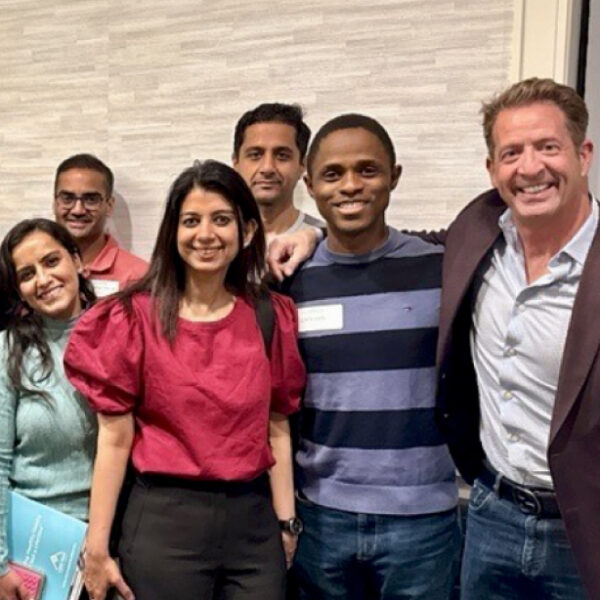
This month, Lone Peak Dental Group had the opportunity to connect with International Student Program students for a dinner focused on immigration and employment pathways after graduation.
The evening centered on helping students better understand current immigration processes, including OPT, work visa options, long-term green card pathways, and the importance of starting early, knowing timelines, asking questions, and getting expert support. Students also had the opportunity to hear from an immigration attorney, ask questions, learn more about Lone Peak Dental Group, and explore current career opportunities within our practices.
The feedback was incredibly encouraging. Every student who completed the feedback form shared that the session was “Super Helpful.” Several students expressed interest in speaking with a recruiter, and many shared interest in pediatrics, our mission, and future opportunities across Lone Peak states including Colorado, Texas, Maryland, Wisconsin, Nevada, Arizona, Washington, Michigan, Florida, North Carolina, California, and New York.
A few comments that stood out included:
“Super interactive.”
“All questions were answered in very detailed.”
“Very informative.”
“Immigration knowledge.”
This event was a great reminder that supporting future doctors starts before graduation. When we create space for honest questions, practical guidance, and meaningful connection, we help students feel more prepared for the road ahead. We also strengthen our doctor pipeline by showing future providers who we are, what we believe, and how our mission comes to life through community-based care.
Thank you to everyone who helped make this event a welcoming and valuable experience. Together, we are building relationships with future doctors who may one day help us expand access to care and continue leaving no patient untreated.
Developing the Leaders Behind the Doctor Experience
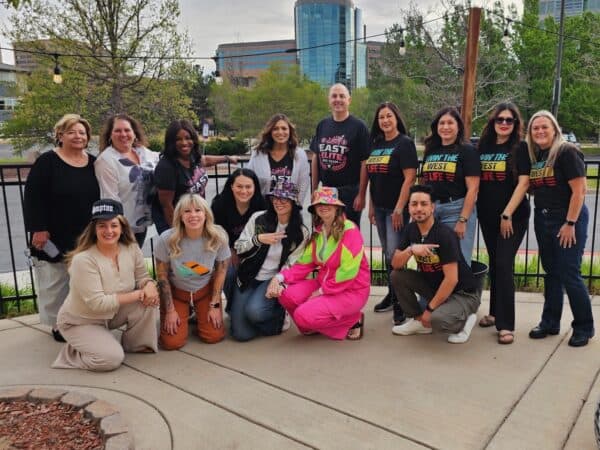
At Lone Peak Dental Group, we believe doctor support is not just about what happens in the operatory. It is also about the systems, people, and leadership surrounding each practice every day.
That is why we recently brought our Regional Operations Managers together for our 2026 Regional Manager Summit: Straight Outta Operations — Throwback Vibes. Forward Focus. The theme brought the energy, but the purpose was clear: strengthen the leaders who help practices run well, teams stay aligned, and doctors focus on delivering great care.
Regional Operations Managers play a critical role in the doctor experience. They help connect clinical goals, staffing, scheduling, patient flow, revenue performance, vendor support, and team accountability. When this role is developed well, doctors feel the difference through clearer communication, stronger operational partnership, and better support in solving the real challenges that show up inside a busy practice.
Across the summit, our ROMs worked through hands-on sessions focused on revenue strategy, orthodontic operations, vendor partnerships, AI and innovation, accountability conversations, doctor compensation, and executive leadership insights. These sessions were designed to move beyond discussion and into practical application, giving leaders tools and action plans they can bring back to their practices.
This investment matters because doctors should not have to carry the full weight of practice performance alone. A strong operations partner helps create the conditions for doctors to do their best work by protecting schedules, improving patient flow, supporting team accountability, and removing barriers before they become bigger challenges.
At Lone Peak, developing Regional Operations Managers is one more way we continue building leadership infrastructure around our practices. We are not asking doctors to succeed in a vacuum. We are investing in the people who support them, advocate for their needs, and help turn company strategy into practice-level execution.
Because when operations leaders grow, practices get stronger.
And when practices get stronger, doctors, teams, patients, and communities all benefit.
Your Benefits Guide – Enrollment 2026

On This Page
- Lone Peak’s Promise: Our Commitment To You
- Important Dates
- Benefits Eligibility
- Company-Sponsored Benefits
- How to Enroll, Make Changes, or Renew Your Benefits
- Meet Nayya: Your AI Benefits Helper
- Resources
Lone Peak’s Promise: Our Commitment To You
Benefits Eligibility
- Full-Time Employees (30+ hours per week): Eligible to enroll in all employer-sponsored benefits, including medical, dental, vision, life insurance, disability, and other core benefits.
- Part-Time Employees (Less than 30 hours per week): Eligible to enroll in voluntary benefits, such as supplemental life insurance, accident coverage, and other optional offerings.
Company-Sponsored Benefits
- Short-Term Disability (STD): Provided to all full-time employees (30+ hours per week) to offer financial protection in the event of a temporary disability.
- Long-Term Disability (LTD): Provided to full-time employees who enroll in a medical plan, ensuring extended financial support if a serious health condition prevents you from working long-term.
- Life Insurance: All full-time employees receive a company-paid life insurance policy for added peace of mind and financial security for your loved ones.
These benefits reflect our commitment to your well-being and financial protection, giving you added security while you focus on what matters most.

How to Enroll, Make Changes, or Renew Your Benefits
- Log into ADP on your desktop, or open the ADP Mobile App.
- On Desktop:
- Click the Benefits tile on the home screen OR
- Navigate to Myself Tab > Enrollments
- On the ADP Mobile App:
- On the ADP Mobile App:
Download for iPhone | Download for Android - Click on Benefits to view, enroll, or make changes.
- On the ADP Mobile App:
- On Desktop:
Make sure to complete your enrollment by 4/29 to secure your coverage for the upcoming plan year.
Meet Nayya: Your AI Benefits Helper
Choosing the right benefits can feel overwhelming—but you don’t have to do it alone! Nayya is here to help.
Nayya is your AI-powered benefits assistant, designed to guide you through your enrollment decisions by answering your questions, comparing plan options, and helping you make the best choices for your needs.How Can Nayya Help?
- Provides personalized recommendations based on your healthcare needs and financial goals.
- Answer common benefits questions to help you understand your options.
- Assists with navigating medical, dental, vision, and voluntary benefits to ensure you get the coverage that’s right for you.
You can access Nayya directly through the ADP benefits portal during enrollment. Let Nayya take the guesswork out of benefits so you can enroll with confidence!
Resources
- FAQ
- Total Rewards Guide
- Comparison Sheet
- Benefit Bites are quick, digestible content to educate you on the benefits you have available through ADP TotalSource. Visit the below links for more information!
- What Are Benefit Bites?
- Open Enrollment & Qualifying Events
- MyLife Advisor
- EPO Vs. PPO
- HSA Vs. FSA
- Dependent FSA
- Dependents
- Short & Long Term Disability Coverage
- Part-Time Employee Benefits
- Dental & Vision
- EAP & Employee Discounts
- Deductibles
- Nayya: AI-Powered Benefits Assistant
- Pet Insurance
- Maven Fertility Benefits
- Mental Health Benefits
AI, AI, AI – Sick of Hearing It Yet?

I hope not, because artificial intelligence will remain a topic at the forefront of healthcare and business for the foreseeable future. If you’re not exploring how AI strategies could integrate into your practice today, you may find yourself behind sooner than you think.
AI goes far beyond simply automating tasks—although automation is often the best place to start. The real value lies in using AI to help scale operations, improve efficiency, and give your team back time to focus on the patient experience.
At Lone Peak, we assembled a cross-department group of leaders known as the Tech Team. Their role is to explore new technology, test solutions, and determine whether those tools should be rolled out companywide.
The process always begins the same way: First, the team identifies a major operational problem or opportunity for improvement. From there, they build a decision matrix outlining required capabilities versus “nice-to-have” features before evaluating potential vendors.
After multiple demonstrations and internal discussions, the Tech Team selects two potential solutions and launches side-by-side pilot programs. Results are carefully measured, documented, and reviewed before presenting recommendations to the broader leadership team.
Pilots are incredibly valuable—but only when they are paired with strong management oversight and clear scorecards. Without defined metrics and stakeholder involvement, it’s difficult to fully understand the impact or earn team buy-in.
Our First Major AI Initiative: Phone Systems
In August 2025, the Tech Team focused on one of the biggest operational opportunities across our practices: Call Answer Rate.
While it’s great to have phones ringing with patients eager to schedule appointments, it becomes a challenge when staffing capacity makes it difficult to answer every call.
To address this, the team piloted two AI-powered phone vendors. Success depended heavily on internal alignment and communication. Weekly vendor meetings, internal team check-ins, and an open Microsoft Teams channel helped gather feedback quickly and keep everyone informed.
One important lesson from the process: AI tools are not turnkey solutions.
While sandbox testing is helpful, true learning happens once systems are live. Lone Peak intentionally moved quickly into real-world implementation, knowing there might be a short adjustment period.
That decision paid off.
Within four months of implementation across 13 practices, AI phones reduced incoming call volume by 60% for scheduling-related calls alone.
Like any new technology, there is an adoption curve as patients become comfortable interacting with AI systems. As additional use cases are added, the system becomes even more valuable.
We started with hygiene scheduling, then expanded to additional procedure types, orthodontic appointments, and are currently testing outbound reminders for unconfirmed patients.
The results continue to speak for themselves. Most importantly, these tools allow our front desk teams to spend less time answering repetitive calls and more time focusing on delivering an exceptional patient experience.
Key Takeaways from Lone Peak’s Tech Team
If there is one thing to remember about implementing AI in your practice, it’s this:
- AI is not a turnkey solution. Successful implementation requires planning, testing, and ongoing refinement.
- Sandbox testing is helpful—but real learning happens live. Don’t be afraid of early adjustments. Real-world data drives better results.
- Involve your team early and often. Open communication channels and regular feedback loops build trust and adoption.
As Lone Peak continues to explore emerging technologies, our Tech Team will keep identifying opportunities where AI can help practices operate more efficiently while improving the patient experience.
The goal isn’t simply to add new technology.
It’s to implement the right technology, in the right way, to support our teams and the communities we serve.
Celebrating the Heart Behind Children’s Dental Health Month

February is Children’s Dental Health Month, a national moment dedicated to raising awareness about the importance of early oral health.
But behind every statistic is something more personal. A story. A moment. A reason this work became meaningful.
On a recent call, several of our pediatric dentists shared how they found their way into children’s dentistry and what continues to make it so rewarding.
Here’s what they shared.
Dr. Jeremy Hodge: From “Never Again” to “Best Kept Secret”
Dr. Hodge did not plan on becoming a pediatric dentist.
In dental school, he had what he describes as a horrific pediatric rotation. He left convinced he never wanted to see another child in his chair.
Then real practice began.
Working with kids changed everything. He saw how rewarding it was to help a child have a positive experience. He also realized how many adults carry dental fear that began in childhood, often from negative experiences.
If we get childhood dentistry right, we change a lifetime.
Today, he calls pediatric dentistry the best kept secret in dentistry. When done well, it is purposeful, efficient, and deeply rewarding. Serving lower income Medicaid communities only amplifies that impact.
Dr. Pushpa Patel: Decades of Commitment
Dr. Patel has been treating children full time for 23 years. Her longevity speaks volumes.
Her message was simple. Pediatric dentistry is fulfilling enough to build a career on. She continues to be a resource for colleagues who want to grow in this space and is always willing to share insight and experience.
There is something powerful about hearing from someone who has chosen this path year after year and still believes in it.
Dr. Brendan Hay: The Education Connection
Dr. Hay never expected to work with kids. Once immersed in the system, something clicked.
He described pediatric dentistry as an ecosystem with clear parameters and efficient systems. What truly resonated with him was the education component.
With family members in education, he found that teaching and guiding children toward healthier habits felt natural. Pediatric dentistry is not just procedures. It is communication, coaching, and building lifelong health literacy.
For him, it became the perfect intersection of dentistry and education.
Dr. Jeremy Bondurant: Kids Are the Easy Part
Dr. Bondurant’s interest was sparked during outreach rotations in dental school. Working in pediatric clinics exposed him to the pace and energy of treating children.
After graduation, he tried working with adults and quickly realized it was not for him.
The kids are the easy part. The hard part is the adults.
Behind the humor is truth. Pediatric dentistry requires clinical skill and strong communication with parents. Building trust and managing expectations are part of the craft.
After years in practice, he continues to choose kids.
Dr. Jose Garcia: Mentorship and Momentum
Dr. Garcia’s path climbed every rung of dentistry. He worked as a dental assistant, then a hygienist, then a general dentist before completing a pediatric residency.
He did not initially plan to specialize in kids. Early mentorship changed his trajectory. Supportive leaders encouraged him to explore pediatric dentistry.
What keeps him passionate is the opportunity to create a positive experience that a child can carry for a lifetime.
Serving one of our busiest and highest need communities makes that impact even more meaningful. Each appointment is more than treatment. It is memory shaping.
Dr. Thomas Bingham: Choosing Kids and Staying
Dr. Bingham began in adult dentistry before gradually incorporating pediatric care. The more he worked with kids, the more he realized it was where he belonged.
After years serving Medicaid populations in Texas, he brought that same commitment to his current community, where pediatric options are limited.
In communities with few providers, showing up consistently matters. For some families, there are only one or two choices. Being one of them carries responsibility and opportunity.
A Month to Celebrate and Say Thank You
Children’s Dental Health Month gives us a national opportunity to shine a light on something our teams prioritize every single day.
Behind every healthy smile is a doctor who chose patience over pressure.
Behind every positive visit is a clinician who chose connection over convenience.
Behind every growing practice in an underserved community is a provider who chose access over avoidance.
Our pediatric dentists carry a unique responsibility. They shape first experiences. They influence lifelong habits. They often serve families who have limited options and high need.
This month, we pause to say thank you.
Thank you to the doctors who make children’s oral health a priority not just in February, but in every operatory, every day.
And thank you to the teams who support that mission and make it possible.
Children’s Dental Health Month is a celebration of smiles. More importantly, it is a celebration of the people who protect them.
2026 Holidays and Payroll Calendars
Your 2026 Holiday and Payroll Calendars are ready to roll. View them below and get a head start on planning:
Training Effectively with Backward Design
Picture this: You’ve trained your team member. You’ve covered all the content and checked every box. Still, your team member struggles to put it into practice. What went wrong? The issue usually isn’t effort or intelligence. When training doesn’t stick, it’s time to look at how it was built. Backward design is a training method that helps you connect learning objectives to real-world results, so knowledge turns into action.
What is backward design?
Backward design is a way to create trainings that flips the usual approach. Instead of starting with content, you start with the end goal by asking “What do you want the learner to do?”
From there, you identify 1) what success looks like in practice and 2) what steps the learner needs to take to get there.
Why use backward design?
Backward design crafts learning experiences with purpose. When you use it, both the trainer and learner are clear from the start on the “why” and “what”. For example, rather than “learning Denticon,” the team member will learn “scheduling a new appointment in Denticon,” a key responsibility in their job.
By centering training on doing rather than knowing, success becomes measurable. You avoid the most common training pitfall: the info dump, where learners listen, take a quiz, and forget.
Instead, backward design crafts trainings where the learner can apply what they’ve learned. And if they can’t, the “stair-step” design structure allows you to quickly identify where they stumbled, so you can spend more time on that step.

Backward Design in Practice
Imagine you have a new Patient Service Coordinator (PSC) and you want her to make calls to schedule recare appointments. That’s your action-based goal: Making a successful recare call.
Next, identify what measurable success would look like. This one’s pretty simple: A successful recare call scheduled for a kiddo who needs it. This is the final assessment.
Now, map the steps required for the PSC to be able to do this. Think of these as steps on a staircase where each skill builds on the one before it. Some skills can be learned in any order, but others depend on earlier steps. Begin at the final goal and outline backwards to identify what the learner must be able to do to get to the end goal.
To make a successful recare call, the PSC must be able to:
5) Schedule an appointment for an existing patient in Denticon
4) Communicate effectively with the caretaker
3) Operate the phone
2) Find the caretaker’s phone number in Denticon
1) Run and read the recare report in Denticon
Outlining these steps in reverse reveals how many progressive skills build up to a single task. You’ll need to make sure the learner can put each of them into action — that’s what we’ll explore next.
Breaking Down the Steps
Each main step can be broken down into smaller, action-based “sub-steps” or scaffolds. These are also outlined working backwards from a single step’s desired outcome.
For example, to run a recare report, a PSC must be able to
e) Select the correct report criteria
d) Select the correct report
c) Access “Recall Reports” in the menu
b) Understand that “Recare” and “Recall” are interchangeable terms
a) Log on to Denticon
Each sub-step can have its own action-based assessment. When the team member can complete each subtask with confidence, they’re ready to move on to the next step.

The Impact of Backward Design
Backward design removes guesswork from learning. Its focus on actionable, measurable goals and the steps required to reach them takes the learner where they need to be.
This approach also makes it easy to pinpoint where learning breaks down. You can revisit specific steps rather than redoing an entire module.
It takes planning at the outset, but the payoff is real, with confident learners, stronger performance, and reliable team members ready to deliver quality care.
Behavior-Based Feedback: A Better Way to Talk About What Matters
A Familiar Conversation
We’ve all heard it—or maybe even said it.
“She’s just got a bad attitude.”
“He’s lazy.”
“They don’t work well with others.”
These kinds of labels might feel like they name the problem, but they rarely help solve it. In fact, they usually do more harm than good. When feedback is vague or personal, it creates shame, not clarity. And that’s not how people grow.
That’s why we take a different approach—one grounded in behavior, not judgment. Because when feedback is clear, kind, and focused on what someone actually did, it becomes a tool for growth instead of a source of tension.
What Behavior-Based Feedback Actually Is
This isn’t about sugarcoating. And it’s not about being “nice” instead of honest. In fact, it’s the opposite. Behavior-based feedback names specific actions, highlights their impact, and gives someone something concrete to do next. It doesn’t leave people guessing. It doesn’t make it personal. It just helps them understand and improve.
The goal isn’t to avoid hard feedback. It’s to deliver it in a way that’s actually useful.
A Formula That Keeps Feedback Focused
Here’s a line that keeps things simple:
“What I want you to do more of or differently is [behavior] because [impact on the team, workflow, or experience].”
Examples:
“What I want you to do differently is follow through with the sterilization checklist at the end of your shift. When it’s missed, the next team has to rush, and it delays care for the kids.”
“What I want you to do more of is how you noticed that parent looked overwhelmed and stepped in with calm, clear instructions. That really helped the family and made it easier for the team to stay on track.”
It’s a clear request, a reason why it matters, and a chance to improve. No drama. Just direction.
Why This Matters in Fast-Paced, People-First Work
Whether you work in a dental office, a care team, or a service-focused role, the pace is quick and the work is emotional. It’s easy to let frustration slip into our words—especially when things feel tense.
But the way we talk to each other becomes the foundation of our culture. Our words shape the experience—not just for teammates, but for the families and communities we serve.
Clear, grounded feedback creates trust. It helps teams function better. And it reminds everyone that feedback isn’t about perfection—it’s about alignment.
How to Start Using This Right Away
If you want to contribute to a healthier team environment, here are some things to keep in mind:
- Stick to what you saw or heard. Don’t make it personal.
- Say why it matters—connect behavior to impact.
- Give both redirection and recognition.
- Ask yourself: “Is this helping this person grow—or just venting my frustration?”
- When in doubt, use the formula.
And one more thing—this doesn’t just work top-down. Peers can use this with each other. Anyone can.
Final Thought
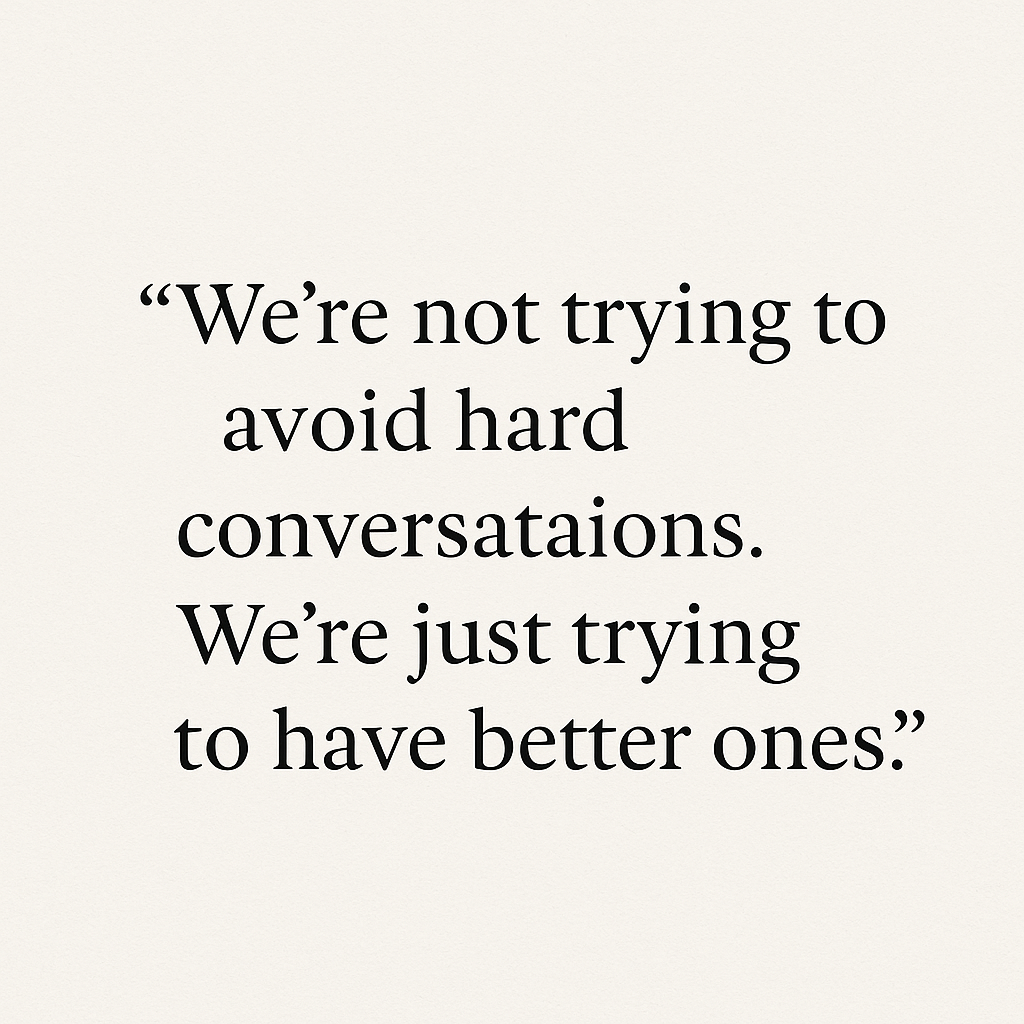
We’re not trying to avoid hard conversations. We’re just trying to have better ones.
Behavior-based feedback isn’t a buzzword. It’s a way of communicating that respects people and holds them to a standard. It helps teams move forward. It makes space for accountability. And it keeps the focus on what matters most: how we show up for each other and the people we serve.
If we’re serious about building strong, people-first teams, then this is the kind of feedback we need—honest, respectful, and always tied to impact.
Let’s keep practicing it, together.
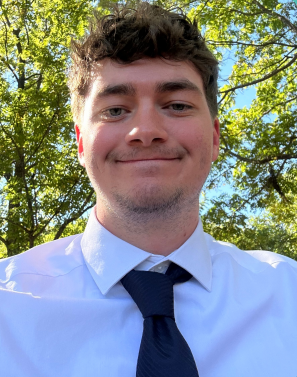
Celebrating Excellence: Chase Dearing Named Q3 Smile Center Excellence Award Winner
We are delighted to award Chase Dearing, Marketing Coordinator, the Q3 Smile Center Excellence Award. Chase plays a key role in connecting people and ideas across the organization. His visuals and storytelling make complex information engaging and easy to follow, helping everyone stay informed in a fun and captivating way.
Chase’s creativity shines through not only in his communication efforts but also in his imaginative work developing the Kidsperience characters and the world that inspires the children we serve. His ability to translate ideas into compelling visuals—like the beloved characters Sparkle and Grimes—adds a unique spark to our culture and reinforces the heart behind what we do.
Beyond his creativity, Chase is known for his reliability, collaboration, and genuine willingness to help wherever he’s needed. His dedication to excellence and his positive spirit make him an invaluable part of the team and a truly deserving recipient of this recognition.