Picture this: You’ve trained your team member. You’ve covered all the content and checked every box. Still, your team member struggles to put it into practice. What went wrong? The issue usually isn’t effort or intelligence. When training doesn’t stick, it’s time to look at how it was built. Backward design is a training method that helps you connect learning objectives to real-world results, so knowledge turns into action.
What is backward design?
Backward design is a way to create trainings that flips the usual approach. Instead of starting with content, you start with the end goal by asking “What do you want the learner to do?”
From there, you identify 1) what success looks like in practice and 2) what steps the learner needs to take to get there.
Why use backward design?
Backward design crafts learning experiences with purpose. When you use it, both the trainer and learner are clear from the start on the “why” and “what”. For example, rather than “learning Denticon,” the team member will learn “scheduling a new appointment in Denticon,” a key responsibility in their job.
By centering training on doing rather than knowing, success becomes measurable. You avoid the most common training pitfall: the info dump, where learners listen, take a quiz, and forget.
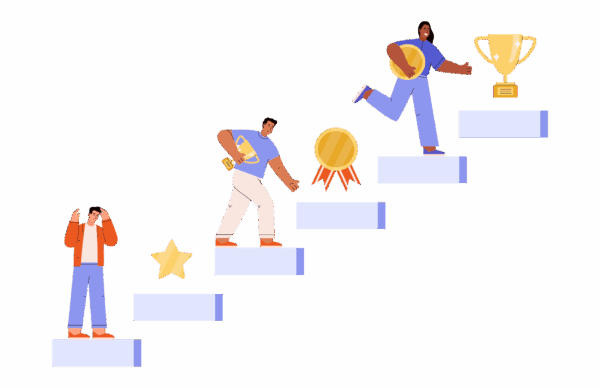
Instead, backward design crafts trainings where the learner can apply what they’ve learned. And if they can’t, the “stair-step” design structure allows you to quickly identify where they stumbled, so you can spend more time on that step.
Backward Design in Practice
Imagine you have a new Patient Service Coordinator (PSC) and you want her to make calls to schedule recare appointments. That’s your action-based goal: Making a successful recare call.
Next, identify what measurable success would look like. This one’s pretty simple: A successful recare call scheduled for a kiddo who needs it. This is the final assessment.
Now, map the steps required for the PSC to be able to do this. Think of these as steps on a staircase where each skill builds on the one before it. Some skills can be learned in any order, but others depend on earlier steps. Begin at the final goal and outline backwards to identify what the learner must be able to do to get to the end goal.
To make a successful recare call, the PSC must be able to:
5) Schedule an appointment for an existing patient in Denticon
4) Communicate effectively with the caretaker
3) Operate the phone
2) Find the caretaker’s phone number in Denticon
1) Run and read the recare report in Denticon
Outlining these steps in reverse reveals how many progressive skills build up to a single task. You’ll need to make sure the learner can put each of them into action — that’s what we’ll explore next.
Breaking Down the Steps
Each main step can be broken down into smaller, action-based “sub-steps” or scaffolds. These are also outlined working backwards from a single step’s desired outcome.
For example, to run a recare report, a PSC must be able to
e) Select the correct report criteria
d) Select the correct report
c) Access “Recall Reports” in the menu
b) Understand that “Recare” and “Recall” are interchangeable terms
a) Log on to Denticon
Each sub-step can have its own action-based assessment. When the team member can complete each subtask with confidence, they’re ready to move on to the next step.

The Impact of Backward Design
Backward design removes guesswork from learning. Its focus on actionable, measurable goals and the steps required to reach them takes the learner where they need to be.
This approach also makes it easy to pinpoint where learning breaks down. You can revisit specific steps rather than redoing an entire module.
It takes planning at the outset, but the payoff is real, with confident learners, stronger performance, and reliable team members ready to deliver quality care.